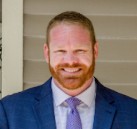
Despite concerns about the fairness of the proceedings, in March 2026, a judge ruled that Jose Ibarra, who was convicted of killing a nursing student, isn’t entitled to a new trial.
Clarke County Superior Court Judge H. Patrick Haggard, who presided over the trial, wrote in an order Monday that the evidence of Ibarra’s guilt presented by the state was “overwhelming and powerful.” After Ibarra waived his right to a jury trial, Haggard found him guilty of murder and other charges during the November 2024 trial and sentenced him to life in prison.
Ibarra had entered the U.S. illegally in 2022 and was allowed to stay while he pursued his immigration case. Prosecutors said Ibarra encountered Riley while she was running on the University of Georgia campus in Athens on Feb. 22, 2024, and killed her during a struggle.
Previously, Ibarra’s trial attorneys asked the judge to delay the trial after a DNA expert said she would need six weeks to review evidence and assist the defense. The judge wrote in his order Monday that Ibarra’s lawyers “effectively challenged the DNA evidence at trial” and that Ibarra was not harmed by the denial of a delay.
Ibarra’s attorneys also had challenged the seizure of two cellphones from his apartment, saying they were not listed on the search warrant, and sought to exclude evidence pulled from them. Haggard wrote that there were “exigent circumstances authorizing the seizure of the cellphones” and that the phones were not searched until after warrants were issued authorizing the search of the contents of the phones.
When Courts Grant New Trials in Georgia Criminal Cases
Before we delve into this point, we should emphasize that constitutional rights, such as the Bill of Rights, protect everyone, regardless of immigration or citizenship status.
Courts have consistently upheld constitutional rights for noncitizens, and courts have also consistently held that criminal defendants are entitled to fair trials, but not perfect trials. The fair-not-perfect-trial doctrine underscores the need for a Marietta criminal defense lawyer to aggressively challenge the state’s evidence at trial and strongly urge all possible defenses. Usually, no do-over is available.
To overcome the FNPT doctrine and get a mulligan, a Marietta criminal defense lawyer must usually prove that the judge abused his/her discretion and that the abuse of discretion changed the trial’s outcome.
As for abuse of discretion, think of a judge as a baseball umpire. If an umpire calls a borderline pitch a ball or strike, that call might be right or wrong, but it’s the umpire’s calls to make. However, if the umpire calls one of these pitches a strike, that’s an abuse of discretion.
Extreme judicial error alone is insufficient. To continue the baseball analogy, unless the bases are loaded in the bottom of the 9th in a tie game, an erroneous pitch-plunking call doesn’t directly alter the outcome of the game.
DNA Evidence and Sexual Battery
Most sexual battery cases are acquaintance rape cases. 90 percent of college student sexual assault victims knew their attackers. DNA evidence is of little value in many of these cases. DNA evidence proves the defendant was there and had intercourse with the alleged victim. These points are usually undisputed in college campus acquaintance rape cases.
But DNA evidence could be game changing in random sexual assaults, particularly if another credible eyewitness didn’t see the attack or the events leading up to it.
A random sexual assault is an extremely stressful event, to say the least. Extreme stress affects perception and recall. Sexual assault victims aren’t focused on their attackers’ appearances. They’re focused on surviving the incident. That’s especially true if, as is often the case, the attack occurred at night and “everything happened so fast.”
Subsequent lineups don’t help much, mostly because of cross-racial bias. If a person of one race sees ten people of another race, and those people are all about the same age, weight, and height, to the witness, everyone in the lineup looks alike. Furthermore, scientists have confirmed that cross-racial bias is a function of biology, not prejudice.
Incidentally, the cross-racial identification percentage (roughly 40 percent) isn’t much lower than the overall accuracy6 percentage, which is about 60 percent.
Stress affects recall as well. The brain suppresses traumatic memories in order to protect itself. Therefore, a sexual battery alleged victim often recalls few details about the attack.
Although DNA evidence proves two people had sex, it doesn’t prove that sex was nonconsensual. That’s another reason this evidence is of little value in many acquaintance rape cases. But consent obviously isn’t an issue in a random sexual assault.
Advanced Search Warrant Issues
Probable cause is probably the most important search warrant issue. Technical considerations are almost as important. If a search warrant isn’t technically correct, a Marietta criminal defense lawyer can exclude the evidence that warrant directly or indirectly produced.
Indirect production is evidence that leads to evidence, such as a map showing the location of buried bank heist loot. If the map is inadmissible, the loot is fruit from a poisonous tree and also inadmissible.
A search warrant must include an oath or affirmation. A signature and a pinky-promise is insufficient. Only legally authorized individuals, such as notaries, can administer oaths. Furthermore, under Georgia law, the affiant must be in the same room, the administering officer must say magic words, and the affiant must sign the document in the presence of that official.
Moreover, especially in mass issuance situations (e.g. a DUI no-refusal weekend that requires dozens of search warrants), officers and/or officials take shortcuts. Any shortcut could render the warrant invalid, regardless of probable cause.
Additionally, search warrants must be specific as to items, place, and time. For example, a warrant may give an officer forty-eight hours to search the basement of a home for blood stains. The plain view exception (officers may seize contraband in plain view) applies between the front door and the basement, but otherwise, officers cannot search the house.
Furthermore, once they reach the basement, they cannot open cabinets to look for drugs, unless the owner consents to that expanded search.
Evidence, or the lack thereof, dictates the outcome of most criminal cases. For a free consultation with an experienced criminal defense attorney in Marietta, contact the Phillips Law Firm, LLC. Convenient payment plans are available.